
Russia to respond to Canada sanctions on rules of reciprocity
Mehr News
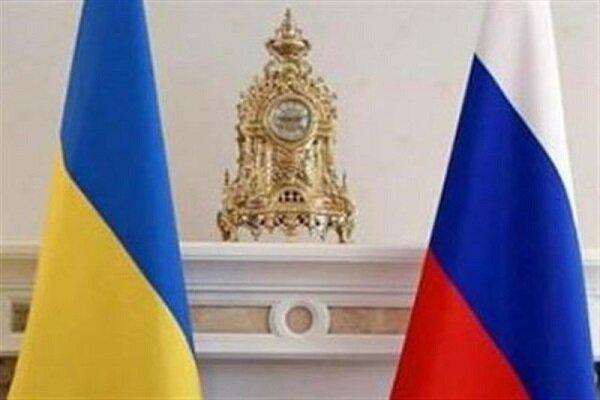
On February 21, Russian President Vladimir Putin recognized the sovereignty of the DPR and LPR (the Donetsk and Lugansk People's Republics). Subsequent agreements on friendship, cooperation, and mutual assistance were signed with their leaders. Putin instructed the Russian Foreign Ministry to establish diplomatic relations with the DPR and LPR, and the Russian Defense Ministry was instructed to ensure the maintenance of peace on their territories. His decision to recognise the independence of two separatist regions in eastern Ukraine prompted a response from an array of Western countries, including the US and the UK.
The US president announced the first tranche of sanctions against Russia, which target VEB and its military bank, Russia's sovereign debt, and imposes sanctions on Russian "elites and their families."
The move came after the United Kingdom slapped sanctions on Russian banks and high net worth individuals while Germany halted the approval process for the Nord Stream 2 gas pipeline project.
Here are the latest updates:
Russian envoy says Moscow to respond to Canada’s sanctions on rules of reciprocity
Russia will not leave another set of economic sanctions imposed by Canada unnoticed and will respond on the reciprocity principle, Russian Ambassador to Canada Oleg Stepanov told TASS on Tuesday.
"Obviously, Russia will respond. The response will be developed in accordance with rules of reciprocity existing in the diplomatic transnational practice.
"Putin instructed the Russian Foreign Ministry to establish diplomatic relations with the DPR and LPR, and the Russian Defense Ministry was instructed to ensure the maintenance of peace on their territories"It will definitely follow," he said.
Japan imposes sanctions on Russia
Prime Minister Fumio Kishida says the measures include prohibiting the issuance of Russian bonds in Japan and freezing the assets of certain Russian individuals as well as restricting their travel to Japan.
Canada announces sanctions on Russia, deploys troops to Latvia
Canada’s Prime Minister Justin Trudeau has announced the first set of sanctions on Russia.
Under the plan, Canadians will be banned from engaging in purchases of Russian sovereign debt, and from all financial dealings with Luhansk and Donetsk.
Canada will also sanction members of the Russian parliament who voted for the decision to recognise Donetsk and Luhansk as independent.
Two state-backed Russian banks will also be subject to additional sanctions.
Trudeau is also sending more Canadian troops to eastern Europe, with as many as 460 members of the Canadian Armed Forces, mostly to Latvia.
Russian envoy says US’ sanctions on Moscow to hit hard financial, energy market
The sanctions against Russia announced by the US administration on Tuesday will hit hard the global financial and energy markets, with average American citizens feeling the consequences as well, Russian Ambassador to the United States Anatoly Antonov said when answering questions on new US restrictions.
"I can’t remember a day when our country lived without any western restrictions. We have learnt to work in such conditions, and not only to survive but to develop the state," he was quoted as saying by the press service of the embassy on Facebook. "Undoubtedly, the sanctions being imposed against us will hit hard the global financial and energy markets. The United States will not remain uninvolved either as average citizens will feel the consequences of the price growth," the diplomat said.
Australia imposes sanctions on Russia
Australian Prime Minister Scott Morrison announced on Wednesday that he would file the nation's own set of sanctions against Russia following Moscow's recognition of the independence of the Donetsk and Lugansk People's Republics (DPR, LPR).
He detailed during his Wednesday announcement that sanctions would be imposed immediately, underscoring that the initiative would include travel bans and strikes against eight members of Russia's security council.
Additionally, there would be penalties against entities tied to Moscow, as well as against Russian banks, transport, energy, telecommunications, oil, gas and minerals.
Venezuela expresses support to Russia
Venezuela expresses all its support to Russian President Vladimir Putin amid the situation around Ukraine and supports the search for diplomatic solutions, Nicolas Maduro said.
“We watched the events in Russia and Ukraine, but not only now, we watched the US and NATO want to do away with Russia militarily, stop it and end this multipolar world… Venezuela will always be with Putin and Russia… All support to President Putin, all support to Russia," he said.
"We declare our support to all dialogue initiatives and the search for diplomatic solutions," he said.
White House says Putin-Biden summit certainly not in plans at this point
A summit between US President Joe Biden and Russian President Vladimir Putin is "certainly not in the plans" now amid escalated tensions over Ukraine, White House spokesperson Jen Psaki said during a press briefing.
"At this point, that is certainly not in the plans," Psaki told reporters when asked if a meeting between Biden and Putin was still possible.
US' Blinken calls off Thursday meeting with Russia's Lavrov
US Secretary of State Antony Blinken has called off a Thursday meeting in Geneva, Switzerland, with Russian Foreign Minister Sergey Lavrov.
"It does not make sense to go forward with that meeting at this time.
I consulted with our allies and partners - all agree - and today [on February 22 - TASS) I sent Foreign Minister Lavrov a letter informing him of this," Blinken said at a joint press conference with Ukrainian Foreign Minister Dmitry Kuleba on Tuesday.
"The United States, and I personally, remain committed to diplomacy if Russia is prepared to take demonstrable steps to provide the international community with any degree of confidence that it’s serious about de-escalating and finding a diplomatic solution. We will proceed, in coordination with allies and partners, based on Russia’s actions and the facts on the ground. But we will not allow Russia to claim the pretence of diplomacy at the same time it accelerates its march down the path of conflict and war," the US’ top diplomat noted.
"Now that <…> Russia has made clear its wholesale rejection of diplomacy," it is unnecessary to hold the talks that were previously planned, he said. "But, having said that, to the extent there is anything that we can do to avert an even worse-case scenario - an all-out assault on all of Ukraine, including its capital, <…> we, our partners remain open to diplomacy," Blinken added.
The meeting between Lavrov and Blinken was initiated earlier by Washington. Moscow gave consent to the meeting.
"We have learnt to work in such conditions, and not only to survive but to develop the state," he was quoted as saying by the press service of the embassy on Facebook"It was suggested to organize the meeting in Geneva.
No need for total military mobilization in Ukraine: Zelensky
Ukrainian President Volodymyr Zelensky said on Tuesday that the country does not need a total military mobilization at the moment, adding that reservists will be conscripted as the military is understaffed.
"Today, there is no need for a total mobilization. We need to quickly make the Ukrainian army and other military formations complete. I, as the supreme commander of the armed forces of Ukraine, issued a decree on calling up reservists during a special period. I emphasize that we are talking exclusively about citizens included in the operational reserve," Zelensky said in a video address.
Read all the updates from Tuesday, February 22, here.
ZZ/
 - February 22nd, 2022
 Related news
Other news on this day


Copyright © 2001-2026 - Sarkhat.com - About Sarkhat - News Archive - جدول لیگ برتر ایران

