
From Taylor Swift to Olympics host, how can Europe’s largest indoor venue be sustainable?
یورو نیوز
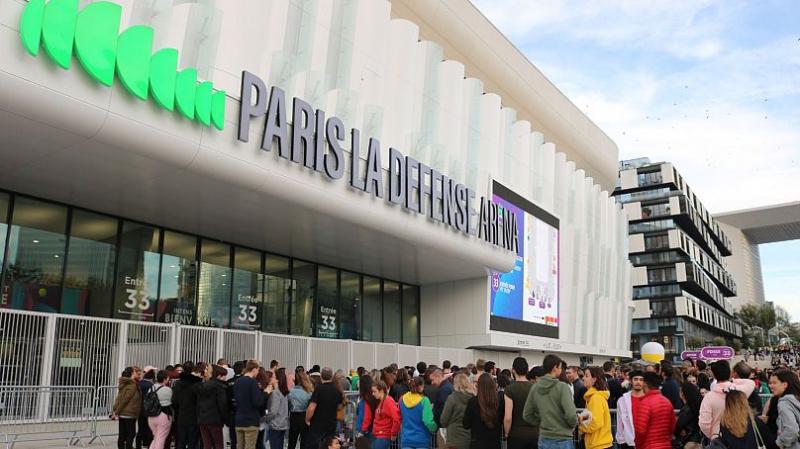
ADVERTISEMENT Paris La Défense, named after the northwest business district where it stands in a giant U-shape, is a master of transformation. The arena is aiming to reduce its energy consumption by ۴۰ per cent and achieve an ۸۰ per cent recycling rate by ۲۰۲۵. "ADVERTISEMENTAs Taylor Swift takes to the stage at Paris La Défense Arena, 45,000 people sparkle back - literally.We’ve each been handed a battery-powered plastic wristband that lights up in multi-coloured unison"This is used to water the (currently covered) lawn, which despite being synthetic needs to be kept slick to reduce rugby player burns and injuries. Taylor Swift is gigantic. “Sometimes I feel like everybody is a sexy baby / And I’m a monster on a hill,” the billionaire sings in her self-portrait Anti-Hero. “Too big to hang out / Slowly lurching toward your favourite city” - or sometimes speeding in via private jet.
As Taylor Swift takes to the stage at Paris La Défense Arena, 45,000 people sparkle back - literally.
We’ve each been handed a battery-powered plastic wristband that lights up in multi-coloured unison. In the blackout of the totally enclosed venue, it’s a crowded galaxy.
As a fledgling Swiftie, I’m immersed in the spectacle of it all. But I’m also here to find out how this colossal arena - Europe’s biggest indoor venue - operates, and whether it can possibly do so sustainably.
Paris La Défense in Nanterre suburb.
Paris La DéfenseFrom Taylor Swift to the Olympics: How does Paris La Défense make the magic happen?
As well as hosting megastars (kicking off with the Rolling Stones in ۲۰۱۷), the modular arena is home to the Racing ۹۲ rugby union club and gets dirty for Supercross motorcycling events.
By midnight on ۵ May - minutes after the last show on the first leg of Swift’s European Eras tour - it went into deconstruction mode.
When I return the next morning, the floor is far more sparsely populated with workmen, cranes and elongated lorries: an everyday sight that accentuates its cavernous scale.
The Paris La Defense arena worked overnight as soon as Taylor Swift left the building.
Euronews Green
It’s mind-boggling to imagine, but a ۵۰-metre swimming pool is being built here as the arena prepares for its next role as Olympic and Paralympic Games host this summer.
The keys of France’s only fully privately funded arena were handed over to Paris ۲۰۲۴ on ۱۵ May and the Olympics team will spend the next five months inside, working ۲۴/۷. The iconic rings are going up next week.How is Paris La Défense Arena getting greener?
High-tech thermal and acoustic insulation helps limit its energy needs, by ensuring consistent temperatures of around ۱۶-25C. Instead of conventional air conditioning, it relies on a cold water system that releases chilled water vapour to keep spectators cool.
On its massive roof, capable of handling ۲۵۰ tonnes of weight, ۳۴ solar panels are powering an adjoining brewery.
Part of the cold water system used to keep the arena cool.
Euronews Green
The building also collects rainwater - funnelling it into an ۸۰۰-metre cubed storage tank under the car park.
As for waste management, Paris La Défense Arena has had its own on-site waste sorting centre since May 2022, where it sifts through trash to ensure more is sent off for recycling. It has stopped Racing ۹۲ and its rivals from using plastic water bottles.
The arena is about to get a lot wetter, of course. Two Olympic swimming pools are being built - the second behind a temporary curtain dividing the interior in half for athlete training purposes. As per the International Olympic Committee (IOC) regulations, the pools have to be ۲.۳ metres high (the bottom 20cm are used for underwater cameras) and it will take three days to fill them.
Once the swimmers have thrashed it out, this water is set to be channelled into La Défense district’s heating network, the arena team says. By another feat of engineering, the pools will be divided into ۲۵-metre units and moved to local community centres.How sustainable is a Taylor Swift-sized show?
Europe’s largest indoor venue is a fitting space for the megastar and her legions of sexy babies. As is London’s Wembley Stadium, and Berlin’s Olympiastadium.
ADVERTISEMENT
But such huge events attract a lot of attention and criticism. Swift’s UK Eras stint will use enough energy to power ۱۹۴ UK homes for a year, according to utilities comparison site Love Energy Savings.
From Racing ۹۲ games to music shows, Paris La Defense Arena is quick to transform.
Paris La Defense
So how can the desire of stars to create ever more spectacular shows align with the demands of the climate and ecological crises to make venues less resource-intensive?
“Part of the issue is that we have now raised the bar to such an extent that audiences expect levels of production that create a 'show' rather than a 'gig',” says Lewis Jamieson, co-executive director at UK-based campaign group Music Declares Emergency.
From a fan experience point of view, innovations in light and sound have led to what he calls an “arms race” in production.
Since few of us would want to give up one of life’s greatest pleasures - whether that’s seeing Swift or another big artist - what’s the solution?
ADVERTISEMENT
- Paris Olympics ۲۰۲۴: Athletes to be kept cool without air conditioning in sustainability drive
How can big stadium shows be more sustainable?
“Without wishing to pass the buck, many of the greatest challenges in live music are outside of the sector's control,” adds Jamieson.
Transport is the biggest one for the touring party, he says. HVO (hydrotreated vegetable oil) -powered lorries are a “great first step,” but these and future EV fleets need government support to incentivise tours away from more polluting forms of travel.
Artists often get a bad rap for flying, though - as Jamieson points out - it's less impactful than audiences flying en masse to see their favourite performer if they don’t travel to them.
A phenomenon of Swift’s hyper fandom (and inflated US ticket prices) meant that a lot of US fans have in fact flown to Europe to see her.
"This is used to water the (currently covered) lawn, which despite being synthetic needs to be kept slick to reduce rugby player burns and injuries. As for waste management, Paris La Défense Arena has had its own on-site waste sorting centre since May 2022, where it sifts through trash to ensure more is sent off for recycling"Paris La Défense Arena estimates that Americans made up ۲۰ per cent of her spectators last month.
But around ۸۰ per cent of people arrived at the Paris shows on the day via public transport, the arena calculated from its control room.
ADVERTISEMENT
The greatest challenge for the show itself remains audience travel, so, globally, “connecting venues to zero carbon transport is an obvious need here,” says Jameison.
Rather than look to limit performers, the campaigner thinks venues should do what they can in-house: switching to renewable power; removing plastic and handling waste better; introducing ticketless systems; creating green spaces and increasing low carbon food options.
London’s O2 arena has ticked a lot of boxes; removing beef burgers after Billie Eilish’s run and never returning them, for example, while achieving an impressive recycling rate.
Paris La Défense Arena is getting a lot of things right too. And since music and culture’s power lies in its ability to move people, communicating that with its audiences is key.

اخبار مرتبط
دیگر اخبار این روز


حق کپی © ۲۰۰۱-۲۰۲۶ - Sarkhat.com - درباره سرخط - آرشیو اخبار - جدول لیگ برتر ایران

